External Wall Insulation done properly.
Approved installers for the full range of EWI systems — EPS, Kingspan PIR, Rockwool mineral wool, and wood fibre. Cut your heating bills 35%+, transform your façade, get a 10-year insurance-backed guarantee. Free quotes across London & the Home Counties.
One job. Three big wins.
External Wall Insulation tackles the largest heat-loss surface on most properties — the walls. Installed correctly, it transforms your home's energy performance, dramatically reduces heating costs, and gives you a fresh new façade in the process.
Unlike internal insulation, EWI doesn't reduce your room sizes. Unlike cavity insulation, it works on solid-walled properties (anything built before about 1930). And unlike re-rendering alone, it pays for itself over time through lower heating bills.
- 35%+ off heating bills
- Removes cold spots & damp
- Transforms kerb appeal
- No internal disruption
- 30+ year lifespan
- EPC rating boost
Four insulation types, each with a right answer.
Most common UK choice. Expanded polystyrene boards — lightweight, cost-effective, good thermal performance (~0.30 W/m²K at 100mm). The right choice for most standard residential properties. 30+ year lifespan.
Best for: standard semis, terraces, family homes
Thinnest high-performance option. Rigid PIR foam achieves the same thermal performance as EPS at significantly reduced thickness — useful on restricted sites or where planning limits overhanging build-up. U-value ~0.22 W/m²K at 80mm.
Best for: restricted sites, premium residential, narrow passageways
Non-combustible. Mineral wool boards required by building regs on many buildings over 11m high. Euroclass A1 fire rating. Excellent acoustic performance. Highly breathable — good moisture management.
Best for: apartments, commercial buildings, fire-sensitive properties
Natural, breathable, sustainable. Hygroscopic — manages moisture extremely well, making it the right choice for heritage and solid-wall properties where breathability matters. Low embodied carbon, premium spec.
Best for: period properties, eco-builds, solid-wall heritage homes
Every EWI system, fully installed.
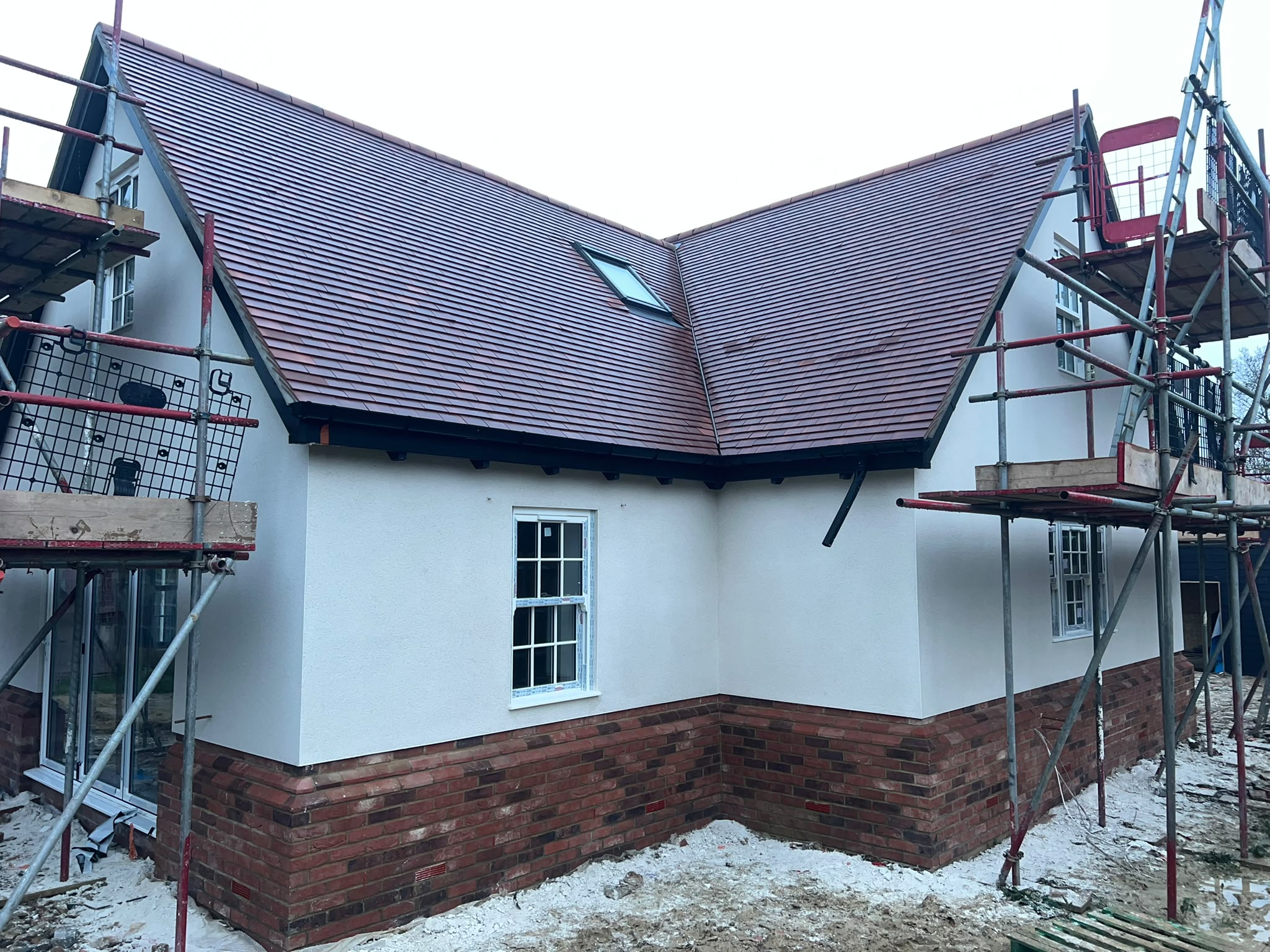
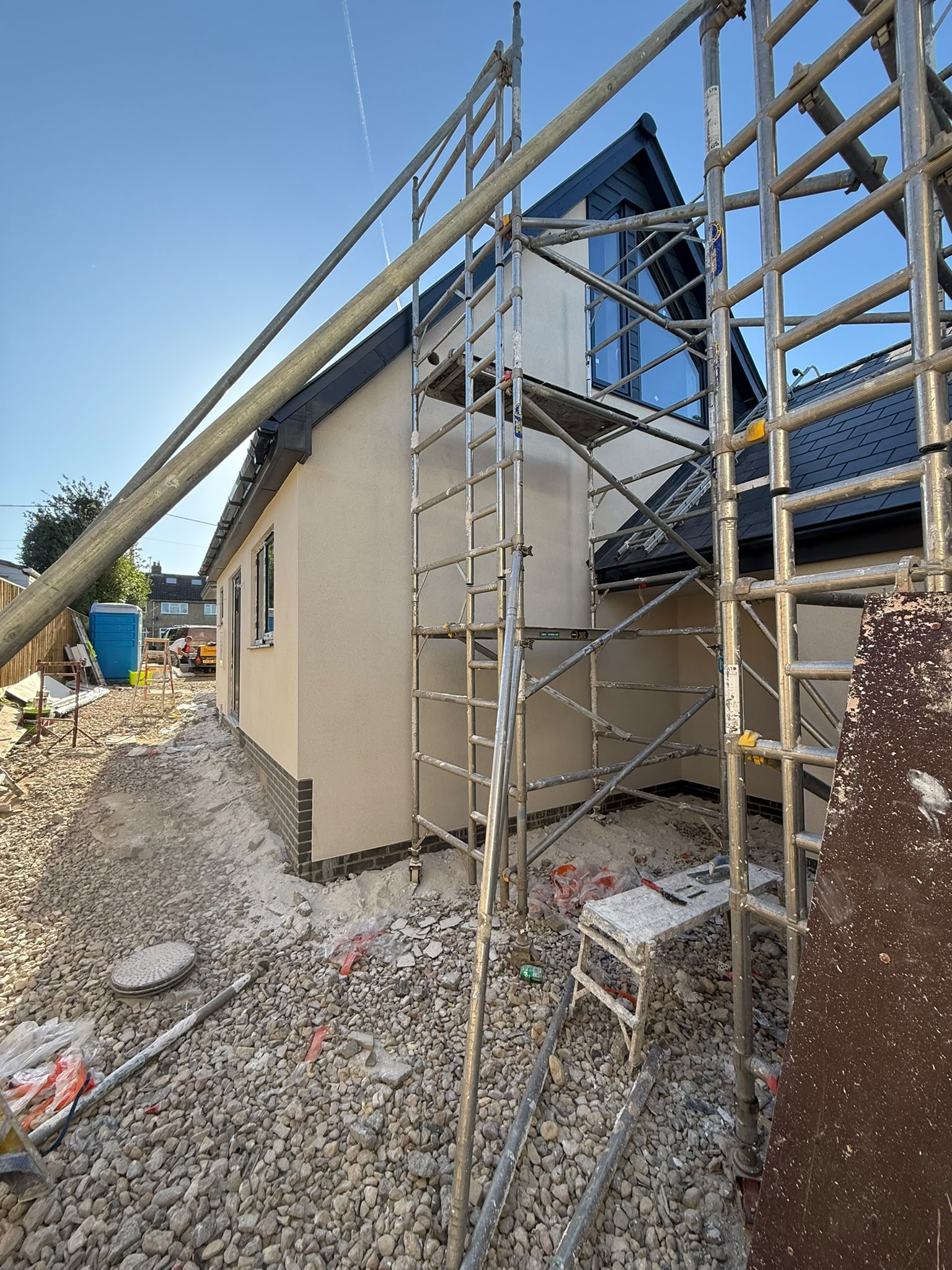
Every EWI installation we deliver is a complete BBA-approved system. We don't subcontract out the render finish to a separate team. Same crew, one warranty, one point of contact.
Cleaning, repair of brickwork, surveying for fixings.
Adhesive + mechanical fixings to manufacturer spec.
Fibreglass mesh fully embedded in basecoat.
Primer coat, then silicone, acrylic or monocouche finish.
All corners, window reveals, sills, drip beads.
Full scaffold supply & strike — built into the price.
RAMS, data sheets, BBA certs, warranty docs.
Insurance-backed workmanship cover.
ECO4 & Great British Insulation Scheme.
Eligible households can receive 25–100% funding for EWI installation through the ECO4 scheme or the Great British Insulation Scheme. Eligibility depends on household income, benefits received, EPC rating, and property type. We can help you check.
Note: we deliver private and grant-funded jobs, but always recommend you confirm eligibility independently before committing.
→ Read our full ECO4 & GBIS guide for 2026
Check eligibility →Means-tested
Income, benefits, EPC band, property type all factor in.
Up to 100%
Some eligible households pay nothing toward the work.
Faster EPC boost
Typical jump of 1–2 EPC bands after EWI installation.
We help with paperwork
We work with approved assessors to handle eligibility checks.
What people ask us about EWI.
How much does EWI cost on a typical 3-bed semi?
For a standard 3-bed semi with around 100m² of wall area, expect £9,000–£15,000 for EPS with a silicone render finish (the most common combination). Wood fibre on a heritage property of the same size runs £18,000–£25,000. London and South East jobs sit at the higher end. Use the cost calculator for a more specific estimate.
Will EWI work on my house?
EWI works on most solid-walled properties (pre-1930s brick or stone), and on many cavity-wall homes where additional insulation is wanted. It doesn't work well on properties with severe damp, structural issues, or extensive timber cladding that can't be removed. We'll tell you straight at the site visit whether your property is suitable — and if it isn't, why.
Will it cause damp problems?
EWI properly installed reduces damp problems significantly — the walls stay warmer inside, so internal surface condensation drops dramatically. Issues arise only when the wrong insulation type is used on a breathable wall (e.g. EPS on a solid lime-mortared wall), or when ventilation isn't preserved properly. We choose the right system for your wall type and never block existing vents or flues.
Does EWI need planning permission?
For most semis and detached homes, EWI falls under Permitted Development and doesn't need planning permission — but if you're in a conservation area, on a listed building, or in a flat/maisonette, you may need it. We can advise during the site visit. We don't apply for planning ourselves, but can point you to local architects or planning consultants who do.
How thick will the walls become?
Standard installation adds 90–120mm to your external walls (EPS at 100mm + render finish). PIR systems achieve the same thermal performance at around 70mm total. This may affect overhanging eaves, gutters, and window reveals — all of which we deal with as part of the installation.
How long does an EWI job take?
A typical 3-bed semi takes 2–3 weeks from scaffold-up to scaffold-strike, weather depending. Larger detached homes or multi-storey properties run 3–5 weeks. Wood fibre installations on heritage properties take longer because the application is more painstaking.
Insurance-backed 10-year workmanship guarantee.
Every EWI job is covered by a 10-year insurance-backed workmanship guarantee, plus £1 million public liability insurance and the manufacturer's product warranty on top.
Ready to discuss EWI for your property?
Free site visits across London and the Home Counties. We'll come out, measure up, and give you a fixed written quote with a clear scope of works.